
What is the internal cause of hair oil?
Hair fall is one of the most common hair concerns faced by both men and women. While factors like pollution, excessive styling, heat, and harsh hair products can affect hair health, internal causes of hair fall can also play an important role.
Understanding what may be happening inside the body can help you build a better hair-care routine and take the right steps toward healthier-looking hair.
What Causes Hair Fall Internally?
Hair growth depends on several factors, including nutrition, hormones, stress levels, genetics, and overall health. When the body experiences an imbalance or nutritional deficiency, the normal hair growth cycle can sometimes be affected.
Here are some common internal factors associated with increased hair shedding.
1. Nutritional Deficiencies
Healthy hair requires adequate nutrition. Low levels of certain nutrients, including iron, protein, vitamin D, zinc, and other essential nutrients, may be associated with hair shedding in some people.
A balanced diet containing vegetables, fruits, whole grains, protein-rich foods, nuts, and seeds can help support overall hair and scalp health.
2. Stress and Lack of Sleep
Long-term physical or emotional stress can affect the body’s normal functions, including the hair growth cycle. Some people may notice increased hair shedding after periods of significant stress.
Poor sleep and an irregular lifestyle can also affect overall well-being. Managing stress, maintaining a regular sleep schedule, and following healthy daily habits can support healthier hair.
3. Hormonal Changes
Hormonal fluctuations can influence hair growth and shedding. Changes associated with conditions such as thyroid disorders, pregnancy, menopause, or other hormonal imbalances may contribute to noticeable hair loss.
If hair fall is sudden, excessive, or persistent, speaking with a qualified healthcare professional can help identify possible underlying causes.
4. Genetics
Genetics is another important factor in hair loss. Androgenetic alopecia, commonly known as pattern hair loss, can affect both men and women.
If hair thinning runs in your family, genetic factors may contribute to gradual thinning around the hairline, crown, or other areas of the scalp.
5. Crash Diets and Poor Nutrition
Rapid weight loss and restrictive diets may reduce the intake of important nutrients needed to support normal hair growth.
Instead of following extreme diets, focus on a balanced eating pattern that provides sufficient protein, healthy fats, vitamins, and minerals.
Can Hair Oil Help With Internally Caused Hair Fall?
Hair oil primarily works as an external hair-care product. A nourishing hair oil can help moisturize the scalp, reduce dryness, improve the feel and appearance of hair, and provide conditioning through scalp massage.
However, hair oil cannot correct an underlying nutritional deficiency, hormonal condition, genetic hair loss, or medical problem.
This is why it is important to look at both internal health and external hair care when dealing with ongoing hair concerns.
Ayurvedic Hair Care for Everyday Nourishment
Traditional Ayurvedic hair care focuses on nourishing the scalp and maintaining healthy-looking hair through herbal ingredients and regular scalp care.
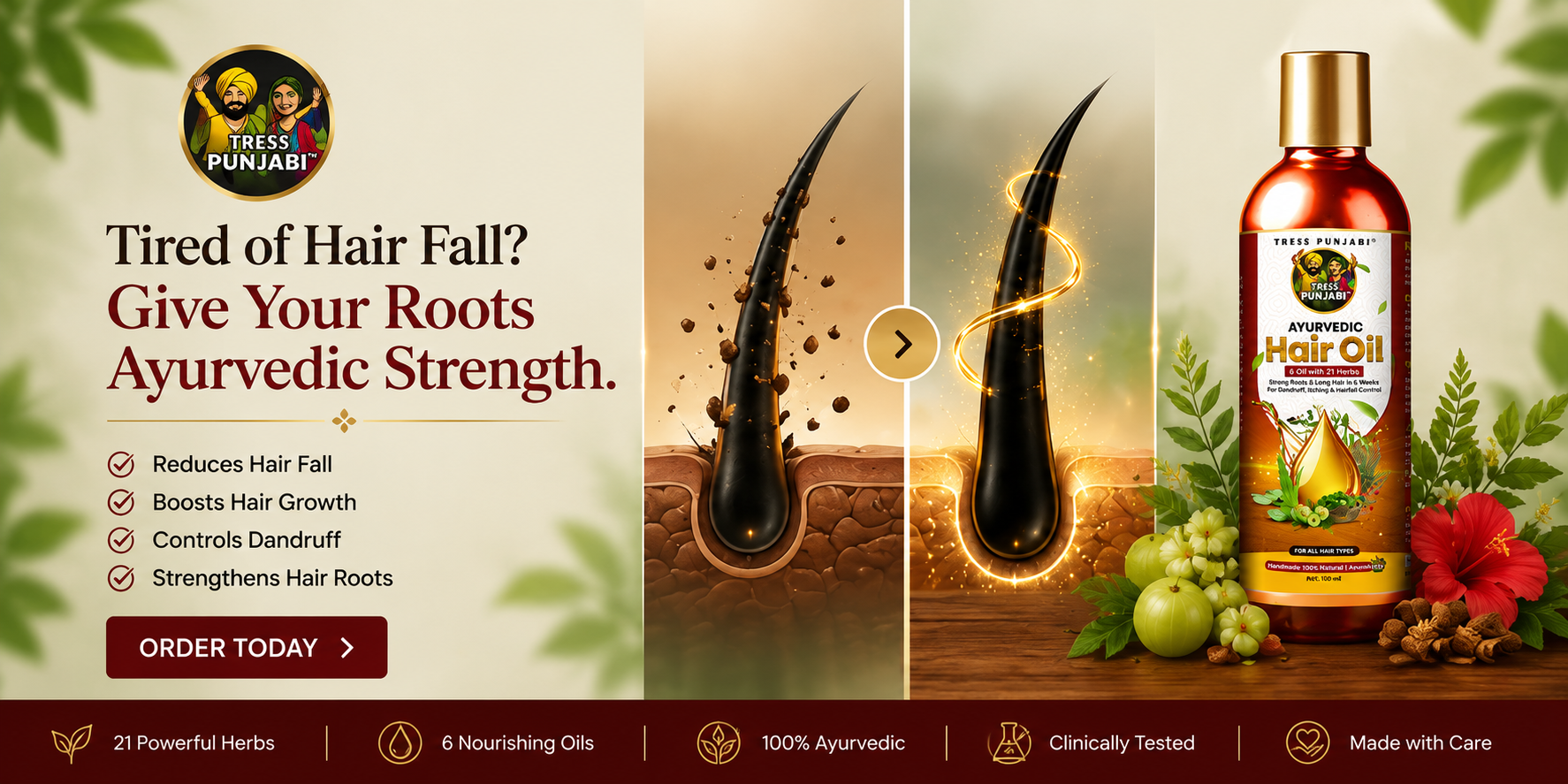
Tress Punjabi Ayurvedic Hair Oil is formulated with a blend of 21 herbs and 6 nourishing oils to support scalp nourishment and healthier-looking hair. Regular oiling and gentle scalp massage can be incorporated into an everyday hair-care routine.
While external hair care can support the condition and appearance of your hair, addressing possible internal factors is equally important when experiencing persistent hair fall.